

Can I smoke CBD? What are the benefits and is it healthy?
|
Time to read 8 min
Free delivery on orders over €59 🚚
|
Time to read 8 min
Smoking CBD is currently the trend. The cannabinoid from the hemp plant is not only supposed to help you relax and sleep better. Consuming it by smoking is also said to help you wean off tobacco or weed more easily. And: When smoked, CBD works much faster than through classic sublingual absorption.
But isn't that quite a contradiction? To consume a product that stands for health and well-being in a form that is proven to cause cancer and many other diseases?
In this article, we will go into detail about the advantages and disadvantages of smoking CBD and clarify all important questions, including which products are suitable for smoking at all. We will also show alternatives to smoking CBD.
Table of Contents
Smoking CBD can help to quit cannabis or to stop smoking. Another advantage: when smoked, CBD acts particularly quickly.
Important: Only special CBD flowers, CBD hash (pressed resin), vaporizer cartridges with pure CBD distillates or isolates are suitable for smoking. Under no circumstances should you put your full-spectrum oils in the vaporizer!
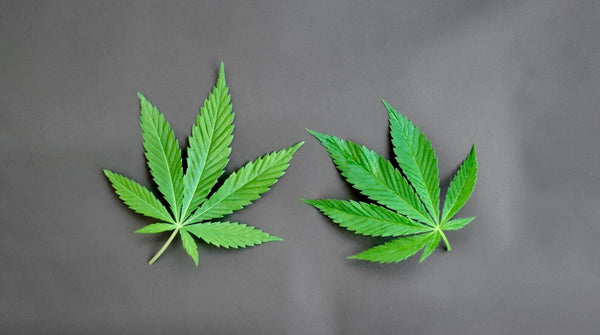
Problematic: CBD flowers look deceptively similar to "normal" hemp flowers with THC content. This can lead to difficulties with the police despite partial legalization. CBD oils are a more discreet choice here.
When smoking CBD, the active ingredient is released by heating CBD-rich hemp flowers or special CBD hash and absorbed through the lungs. The cannabinoids (active ingredients of the cannabis plant) contained are activated (decarboxylated) by the heat and enter the bloodstream within a few seconds. The effect is immediate: relaxation, a feeling of inner calm and serenity, in some cases even slight drowsiness.
CBD is also present in classic marijuana/weed and provides a pleasant feeling there. However, THC, the psychoactive cannabinoid, usually predominates. Recreational users in particular rely on the psychoactive effects of THC and less on the calming effect of CBD in weed.
Good to know:
THC is found in both recreational and medicinal cannabis.
In Germany and many other EU countries, legally available CBD products must not exceed a THC content of 0.2% or 0.3% THC. This applies to CBD oils as well as to special CBD flowers and hashish.
Probably the biggest advantage of inhaling CBD is its fast effect. While drops, sprays, capsules or edibles take a certain amount of time to be absorbed through the mucous membranes or digestive tract, the effect of smoking is often noticeable within a few minutes. This is particularly interesting for those who hope for an effect of CBD on acute nervousness, stress, anxiety or muscle discomfort.
In addition, smoking allows for high bioavailability compared to other forms of consumption. Studies show that about 30 to 50% of the active ingredient is actually absorbed by the body when cannabinoids are inhaled. In comparison: When taken orally or as CBD oil, this value is often only 6 to 20%, as a large part of the CBD is excreted unutilized by the liver.
Especially for ex-smokers or cannabis consumers, another point is interesting: smoking or getting high has become a ritual for them. In addition to physical addiction, psychological addiction ensures that they eventually revert to cigarettes or joints. They have become so accustomed to smoking - especially in certain situations like stress or in company - that they eventually relapse.
Turning to CBD flowers can help to break an unwanted addiction and replace cigarettes or THC-containing cannabis products. However, it is all too often forgotten that even smoking CBD is not without side effects.
One thing you should never forget: smoking CBD also carries a risk for the lungs - even if the smoking product is nicotine-free. Even when cannabis flowers are burned, harmful substances and tiny particles are produced that penetrate deep into the lungs and put a severe strain on them in the long term. The possible consequence: lung diseases and lung cancer.
For people with existing respiratory diseases such as asthma, COPD or chronic bronchitis, smoking CBD is therefore not recommended in any case. But even in healthy people, regular consumption of smoking products can cause lung damage.
Another difficulty: Dosage. When smoking, it is very difficult to control how much of the active ingredient CBD is actually absorbed. Everyone smokes differently, the quality of CBD flowers can vary greatly (as can the THC content), and ultimately, every body reacts differently. Especially if you are using CBD for medical purposes, smoking is therefore hardly recommended.
Last but not least, there are also legal pitfalls. While CBD flowers with minimal THC content are generally legal in Germany, this is not recognizable by every patrol officer. There are repeated reports of people who have been checked with their CBD flowers and suspected of carrying larger than allowed amounts of THC-containing cannabis.
Furthermore, the import of cannabis (CBD- or THC-focused) across the German border remains punishable. Special caution is also advised if you want to take your CBD cannabis with you on a trip to avoid interrupting your routine. In many countries, cannabis remains illegal, and penalties are often very high.
A not to be underestimated risk when smoking CBD flowers is the risk of confusion with THC-containing cannabis – especially during traffic controls. CBD flowers look deceptively similar to classic marijuana (it's the same plant, just with a different cultivation focus). They also do not differ in aroma and taste from – still not completely legal – weed.
In traffic, the consumption of cannabis is subject to severe penalties. Even if you are completely fit to drive, but CBD cannabis is found on you, a quick test can be carried out.
The problem is that many rapid tests do not clearly distinguish between THC and CBD. If the test is positive, a blood sample is likely. While a later laboratory analysis usually shows that the THC level is below the legal limit or even undetectable, your day will be sufficiently ruined by then. Even a fine procedure or a driver's license revocation can initially be possible until the laboratory result is available.
Particularly sensitive: In some cases, even the consumption of legal CBD can lead to minimal amounts of THC in the blood that are just above the permitted limit. This is more likely when consumed by smoking, as a larger proportion of the cannabinoids THC and CBD are absorbed.
Even though the positive effects of CBD are slowly becoming known, there is still often a lack of information on the safe consumption of CBD. This also includes: Which products can I actually smoke? There are repeated reports of consumers who have tried to smoke commercially available CBD oils - be it in a joint or in a vape pen. And that is really dangerous!
Because most CBD oils contain so-called carrier oils, such as MCT oil (from coconut), hemp oil, or olive oil. These oils can decompose into dangerous compounds when heated and flood the lungs with oil droplets. Possible consequence: A so-called lipid pneumonia (fat embolism of the lung), which can even be fatal.
Only products specifically designed for inhalation are smokable, including dried CBD flowers, CBD hash (pressed resin), vaporizer cartridges with pure CBD distillates or isolates.
As always: pay attention to quality. Unfortunately, there are many inferior products on the market that often contain pesticides, solvent residues or even synthetic cannabinoids.
In short: Especially for those who use CBD to support their health – for example, for chronic pain, autoimmune diseases, anxiety disorders, or sleep problems – smoking CBD flowers is not a long-term option. The alternative: CBD full-spectrum oils, which are simply dropped under the tongue.
This so-called "sublingual" intake offers many advantages: The drops enter the bloodstream directly via the oral mucous membranes, bypassing the lungs or gastrointestinal tract. The effect takes a little longer (approx. 15-45 minutes), but lasts for up to 8 hours. The dosage can be ideally adjusted and varied. This is especially helpful for those who want to adapt their dose to their body's reaction.
And most importantly: the drops do not burden the body, especially the respiratory tract, at all. Even with long-term use to relieve symptoms, no negative long-term effects are known.
In addition, the application is discreet, odorless and can be flexibly integrated into everyday life. Those who do not like the typical hemp taste are well advised to use oils with additional natural flavors. Innovative sprays also make application particularly easy when on the go.
Feature/Method of intake |
Smoking CBD |
CBD drops (sublingual) |
|---|---|---|
Onset of effect |
Very fast (30 sec. to 2 min.) |
Medium fast (15–45 min.) |
Duration of effect |
1–3 hours |
4–8 hours |
Bioavailability |
High (30–50 %) |
Medium (10–20 %) |
Health risk |
Strain on lungs, irritants |
Very low, no inhalation necessary |
Dosability |
Imprecise, highly fluctuating |
Very precisely dosable |
Therapeutic use |
Only conditionally suitable |
Very good for long-term use |
Smokable products |
CBD flowers, hash, special vape liquids |
- |
Discretion |
Low (smell, smoke development) |
High (hardly noticeable) |
Side effects |
Cough reflex, lung irritation possible |
Rare, usually well tolerated |
Legality |
Partially difficult with CBD flowers (risk of confusion) |
Clearly legal, as long as minimal THC content |
It is certain that smoking CBD can sometimes be really helpful. Be it because you need a particularly fast effect or because you want to use CBD to quit smoking/cannabis (or consume less tobacco/weed). However, if you want to benefit from the positive properties of cannabidiol in the long term, full-spectrum oils are a better choice.
They are gentler on the respiratory tract, can be better dosed, and work slowly without short peaks in effect. Anyone using CBD therapeutically, for example, to find relief from chronic conditions, should also seek advice from a doctor - and preferably use high-quality full-spectrum oils for consumption.
Opinions of our customers:

