

Is CBD a drug? Experts weigh in
|
Time to read 7 min
Free delivery on orders over €59 🚚
|
Time to read 7 min
In recent years, cannabidiol (CBD) has evolved from a hype to an everyday companion for many. Whether as oil, capsules, gummy bears, or in cosmetic products: CBD products have long been established and are easily and legally available in drugstores, pharmacies, and online shops.
But while some can't imagine life without CBD to relieve stress, insomnia, or pain, others are not so sure. CBD is, after all, extracted from cannabis, quite similar to psychoactive THC. So, isn't it perhaps just a drug, and the risks associated with its consumption are not taken seriously enough?
We're taking a close look at the topic. This includes: information on the legal situation in Germany, how CBD works, what distinguishes it from THC, and current assessments by experts.
Table of Contents
In Germany, CBD is not subject to the BtMG (Narcotics Act) as it is not addictive and does not cause intoxication. Thus, it was legal even before the partial legalization of cannabis in 2024.
Users have been reporting the benefits of CBD for years, including improved sleep and relaxation, pain relief, and reduction of stress and anxiety. Research also supports this. However, more clinical data is still needed to clearly prove its effectiveness and to promote the development of CBD-based medicines.
As early as 2018, the WHO stated in a major study that CBD is neither addictive nor causes intoxication - and therefore is not considered a drug.
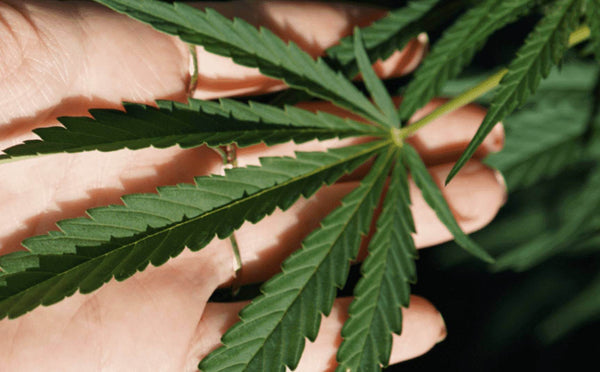
CBD (Cannabidiol) is one of over 100 known active ingredients, so-called cannabinoids, found in the hemp plant (Cannabis sativa). Unlike its famous relative THC (Tetrahydrocannabinol), CBD is not psychoactive. This means it does not cause intoxication or get you high.
Important to know: CBD is extracted from specific cultivated varieties of industrial hemp that naturally have a very low THC content. These hemp varieties are approved in the EU and could be legally grown and processed in Germany even before the partial legalization of cannabis in 2024.
CBD products therefore generally contain very little THC. Reputable suppliers ensure that the THC content is below 0.1% to safely rule out a psychoactive effect.
For years, users have reported the positive effects of CBD, for example, in relieving pain and inflammation, as well as psychological problems such as anxiety and stress. CBD has also long been successfully used for sleep problems.
Although there are now a number of studies on the effects of CBD, only one approved CBD-based medicine exists so far. Epidiolex® was first approved in Germany in September 2019 for the treatment of epilepsy.
While there are studies on its effect on anxiety disorders (1) and pain (2), and for the treatment of sleep disorders (3) and many other symptoms, there is often a lack of large-scale clinical trials to unequivocally prove its efficacy. Overall, it has been found that the effect of CBD - especially compared to THC - is milder.
This also implies that CBD is generally very well tolerated and has very few side effects compared to many other medications.
Effects of CBD according to studies
Anxiety-relieving (anxiolytic)
Anti-inflammatory
Antiepileptic
Neuroprotective
Sleep-promoting
Pain-relieving
CBD is generally considered to have very few side effects. The most important side effects are indeed primarily interactions with medications (e.g., blood thinners, antidepressants). Some users also report dry mouth, fatigue, and mild gastrointestinal problems.
However, compared to many prescription medications, these side effects are mild and occur rarely. According to the WHO (World Health Organization), CBD is neither toxic nor addictive - and thus differs significantly from the drug THC.
Side effects of CBD
Dry mouth
Fatigue
Gastrointestinal discomfort
Interactions with medications (e.g., blood thinners)
Changes in appetite
In rare cases, low blood pressure
A first milestone in German cannabis policy was the "Cannabis as Medicine" Act, which came into force in March 2017. It allows patients with certain medical conditions (e.g., chronic pain, multiple sclerosis, cancer) to receive medical cannabis on prescription.
The problem: Medical cannabis also contains THC and therefore has all the, sometimes serious, side effects of common "weed." Many patients did not want to accept these and therefore switched to CBD-dominant varieties or entirely to CBD drops.
Due to its lack of psychoactive effects, CBD is not subject to the German Narcotics Act (BtMG). However, it must be certified as coming from approved industrial hemp and contain less than 0.2% THC.
Another important milestone: The partial legalization of cannabis in 2024. This law allows adults to possess up to 25 grams of cannabis for personal use, as well as the non-commercial cultivation of up to three plants. Additionally, "cannabis clubs" are permitted to form to collectively cultivate and consume cannabis.
CBD products are not directly affected by this law, as they were often already legal. However, there have been recurring legal uncertainties in the past, especially concerning food products containing CBD. Many hope that the situation will now become more relaxed for CBD users as well.
Indeed, we need to look at this question in three different contexts: pharmacology, legal status, and everyday understanding.
In pharmacology, any biological substance that can alter functions in a living organism but is not food is considered a drug. Therefore, CBD is considered a drug. So are coffee, nicotine, and alcohol.
In the Narcotics Act (BtMG), very specific substances are defined as drugs. CBD is explicitly not included, provided the THC content is below 0.2%.
In everyday language, "drug" usually refers to illegal substances that can be intoxicating and addictive. In this context, CBD is also not a drug. It does not get you high, is not addictive, and is legally available. Moreover, it is very safe and has few side effects.
Nevertheless, CBD acts on the central nervous system – like many medications. So, one could call CBD a "drug," but then morning coffee would also be one.
The World Health Organization (WHO) conducted a comprehensive evaluation of CBD in 2018. (4) Their conclusion: "CBD exhibits no potential for abuse or signs of dependence. There is no evidence that CBD is harmful to human health."
That's pretty clear. The WHO even advocates for removing CBD from the list of illegal or restricted substances to facilitate access to medically effective CBD products.
WHO assessment of CBD (2018):
No abuse potential
No dependence
No evidence of harm to health
Recommendation: Decriminalization
Potential for medical applications
Nevertheless, for many, a certain uncertainty remains. This is certainly also related to the general public's idea that CBD is the same as or very similar to cannabis. The decades-long demonization of the hemp plant probably plays a role here, as well as the misconception that all cannabinoids are psychoactive.
However, the distinction is really important. While CBD is a component of the cannabis plant, it acts completely differently from THC. While THC binds to the endocannabinoid system (which is responsible, among other things, for the high and potential addiction), CBD merely modulates the processes within the endocannabinoid system. In fact, CBD has even been shown to have an antipsychotic effect – it could therefore even mitigate the effects of THC.
The answer is quite clear: Yes and no. From a pharmacological perspective, CBD is a drug—just like caffeine, aspirin, or nasal spray. It influences biochemical processes in the body and can be used to treat certain medical conditions. So far, few CBD medications are approved, but research is making incredible progress here in recent years. It is only a matter of time until more CBD medicines come to market.
Aside from that, CBD is not a drug in the legal or colloquial sense. It does not have an intoxicating effect, is not addictive, is generally very well tolerated, and can be legally acquired.
The assessment of drug/not a drug therefore depends very much on the context you are in. The fact is: CBD is an extremely exciting substance whose medical benefits are far from being exhausted. Further studies are expected to explain the connection between CBD and our ECS even more precisely and show how valuable it can be for our health and well-being.
If you want to use CBD products, thoroughly inform yourself about their quality, origin, and application—and if in doubt, speak to your treating physician, especially if you are taking other medications.
As with any substance, CBD should be used in moderation. And: The correct dosage, quality, and application are crucial for the most positive effect without unwanted side effects.
Our customers' opinions:
Sources and Studies
(1) Bergamaschi, M., Queiroz, R., Chagas, M., De Oliveira, D. C. G., De Martinis, B. S., Kapczinski, F., ... & Crippa, J. A. S. (2011). Cannabidiol reduces the anxiety induced by simulated public speaking in treatment-naïve social phobia patients. Neuropsychopharmacology, 36(6), 1219–1226.
(2) Mondello, E., Quattrone, D., Cardia, L., Siracusa, R., D’Amico, R., Impellizzeri, D., & Cuzzocrea, S. (2023). Cannabinoids and pain: A systematic review and meta-analysis of controlled clinical trials. Drugs, 83(4), 389–412.
(3) Lavender, I., Garden, G., Grunstein, R. R., Yee, B. J., & Hoyos, C. M. (2024). Using cannabis and CBD to sleep: An updated review. Current Psychiatry Reports, 26(12), 712–727.
(4) World Health Organization. (2018). Cannabidiol (CBD) Pre-Review Report Agenda Item 5.2. Retrieved from https://cdn.who.int/media/docs/default-source/controlled-substances/whocbdreportmay2018-2.pdf


