

HHC: How dangerous is this legal high really!
|
Time to read 9 min
Free delivery on orders over €59 🚚
|
Time to read 9 min
Before the partial legalization of cannabis in Germany in 2024, so-called "Legal Highs" were very popular for getting high without problems with the police. A particularly popular - but highly dangerous - Legal High: HHC (Hexahydrocannabinol).
Anecdotal reports in social media described HHC as having a THC-like effect. HHC was said to be cheaper, readily available, and, crucially: legal. However, while cannabis has been legally available within certain limits in Germany since 2024, HHC was banned in the same year.
This article explains why HHC was banned and what makes it so dangerous. What is the chemical background of the substance, and why is it mostly produced synthetically or semi-synthetically? What does this mean for potential consumers?
Table of Contents
HHC is a synthetic or semi-synthetic cannabinoid and, according to current experience, its effects are comparable to THC. It was long sold as a "legal" alternative to cannabis, but has been hardly scientifically studied so far.
The risks far outweigh the benefits: users report anxiety, panic attacks, and psychological problems, and due to unregulated production, there is a risk of contamination or unintentionally high dosages.
Since June 2024, HHC is banned in Germany. Those who wish to enjoy the positive effects of the hemp plant without intoxication should opt for truly legal and safe alternatives such as CBD or full-spectrum oils.
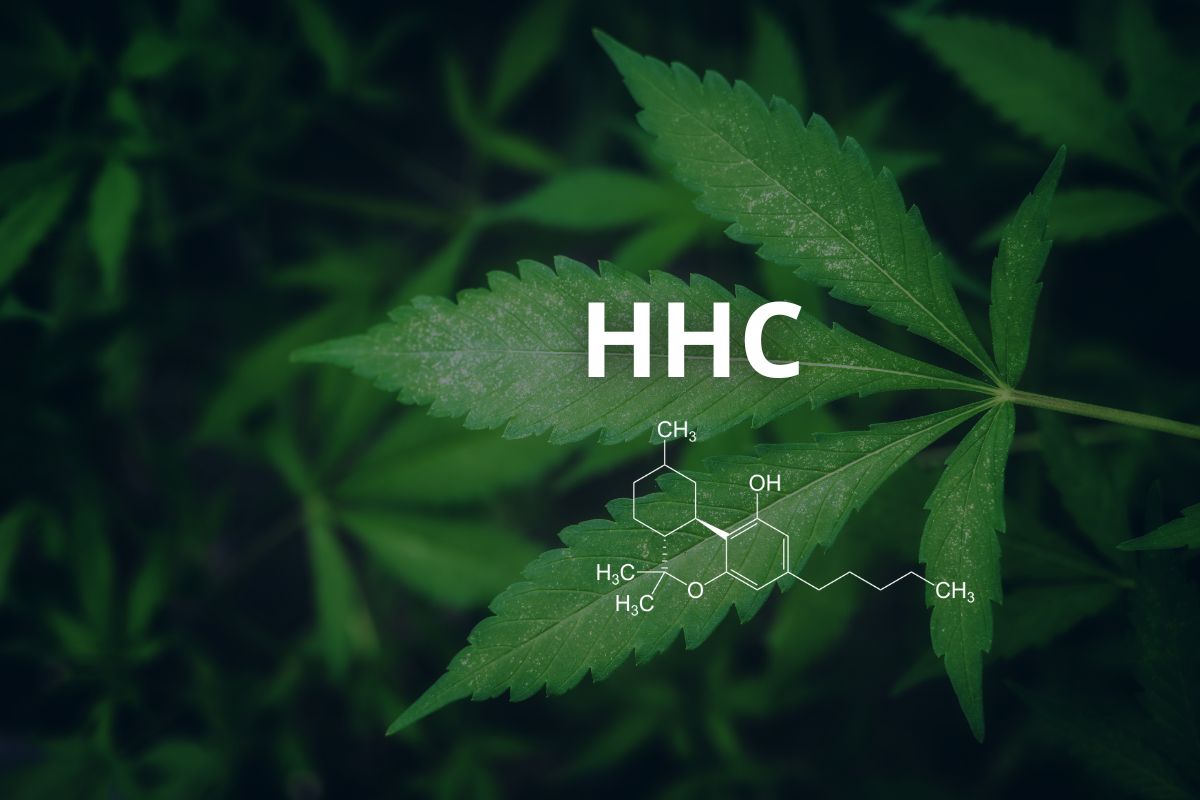
Especially in the times before cannabis became legal in Germany, HHC (hexahydrocannabinol) was often touted as a substitute for cannabis (more precisely: Delta 9 Tetrahydrocannabinol (Δ 9-THC)). And indeed: the chemical structure of HHC is very similar to that of THC. HHC naturally occurs in the cannabis plant, but in very small amounts.
However, it can be produced by hydrogenating THC. This involves reacting either a cannabis extract or semi-synthetic Δ8-THC or Δ9-THC with hydrogen in a catalyst.
But the similarity with THC is not only on a chemical level. HHC also has a similar effect to THC. Users report relaxation, euphoria, increased appetite, reduced pain, and improved sleep. Especially on social media, HHC was therefore hyped.
The legal situation until 2024 was that HHC - unlike THC - was not prohibited or even restricted. Before the ban, a whole range of HHC products could be legally purchased, including special HHC flowers, vapes (e-liquids), oils, capsules, and edibles (i.e., foods such as HHC-containing gummy bears or cookies). HHC was readily available in kiosks, CBD stores, or online shops - and even without age verification.
In 2024, the legal loophole around HHC was finally closed. The substance was included in the "New Psychoactive Substances" Act, making the production, acquisition, and sale of HHC products illegal. This ended a veritable million-dollar business for some providers. However, possession remains permitted.
High-quality CBD oils from hanfgeflüster
Generally, it holds true that even though HHC was first synthesized in the 1940s (by chemist Prof. Roger Adams (1)), we still know very little about its effects and the risks associated with its consumption. There is a lack of meaningful studies on its acute and, more importantly, chronic effects in humans. Initial findings come from animal and cell experiments. In humans, the evidence currently relies on individual case reports (e.g., 2, 3). Reliable clinical data are lacking.
The German Federal Institute for Risk Assessment also stated in 2023 that the scientific data situation was insufficient. (4) As of today, HHC is banned in many European countries. At the UN level, HHC was included in Table II of the "Convention on Psychotropic Substances" in March 2025 and is thus subject to strong international restrictions.
HHC can act similarly to THC; specifically, the β-HHC form produces very similar effects to THC. It is often reported that the psychoactive effect is significantly stronger than with cannabis. Many affected individuals report negative effects such as anxiety, paranoia, or panic attacks, especially at high doses.
In addition, there are side effects, some of which are also known from THC: dizziness, nausea and vomiting, a strong cough reflex, and the feeling of losing control. Even experienced THC users report that the HHC high was extreme. Others report persistent nervousness, physical discomfort, and panic attacks after prolonged use.
Severe psychological reactions have also been documented – including disorientation, depression, paranoia, and psychoses. Adolescents, in whom HHC was (and still is) tragically popular, are considered particularly at risk here. Their brains are still developing and react particularly sensitively and for a long time to psychoactive substances.
But HHC not only endangers adolescents. Even children learn about the substance through social media or accidentally consume HHC sweets (e.g., gummy bears). This can lead to severe symptoms of poisoning and, in the worst case, long-term serious consequences.
The protection of children and adolescents was certainly one reason why the cannabinoid was banned in 2024. On June 14, 2024, the Bundesrat (Federal Council) decided to amend the schedule of the NpSG, including HHC and related synthetic cannabinoids. On June 27, the amendment came into force. Since then, the production, distribution, sale, acquisition, and possession in Germany have been prohibited. Products containing HHC are also covered by this ban.
However, the ban was also due to other reasons. These included the unclear effects of HHC and potential, completely unknown health risks. Furthermore, due to the unclear data, no statement could be made about the dosage. What dose could be defined as harmless, and when would it become dangerous?
Due to these uncertainties, it was decided to completely ban HHC.
HHC is mostly produced synthetically or semi-synthetically, generally by converting CBD or hydrogenating THC. This process creates by-products. Since HHC is illegal, there is no regulation or verifiable quality control. Unlike substances you can buy at the pharmacy, HHC products are not subject to supervision. Products may contain contaminants such as heavy metals or toxic residues. Particularly cheap HHC products are said to pose a very high risk here.
Dosage and purity can also fluctuate greatly. While your last HHC dose might have been relaxed, the effect of the next round could be much stronger – and with it, the side effects.
A synthetically produced cannabinoid like HHC can therefore be particularly problematic. This sounds strange at first glance. Shouldn't a laboratory-produced product be particularly pure and highly effective - like a medicine?
Basically, yes. But: the production and sale of HHC are not regulated, i.e., not monitored by authorities - quite unlike medicines. Furthermore, there is a lack of studies on effects, long-term consequences, and side effects, without which medicines would not even be put on the market.
And very importantly: With cannabinoids, the so-called entourage effect must always be considered. It has been observed that the various compounds naturally found in the hemp plant (more than 100 cannabinoids, terpenes, and other substances) influence each other's effects. This appears to be related to their different influences on the body's cannabinoid receptors.
For example, it has been observed that the psychoactive effect of THC can be mitigated by CBD. Instead, the mood-lifting, pain-relieving, and relaxing properties of THC then dominate. Science assumes that this is why natural cannabis flowers or full-spectrum extracts produce a more balanced effect than synthetic or semi-synthetic cannabinoids like HHC.
When it comes to legally consuming cannabinoids - without the psychoactive effects of THC - full-spectrum oils are generally the better choice and offer a whole range of advantages.
Full-spectrum oils are extracted using a gentle process. In contrast, HHC requires complex laboratory procedures and auxiliary chemicals. Additionally, full-spectrum oils do not get you high and can therefore be easily integrated into daily life. Another advantage is the aforementioned entourage effect: the interaction of cannabinoids, terpenes, and flavonoids enhances and balances the effects of the oils.
The most important point, however: regarding full-spectrum oils and CBD, the scientific evidence is quite clear, whereas for HHC, there are – if any – rather studies on the high risks. Added to this is legal certainty: CBD full-spectrum oils are completely legal in Germany. Since only minimal amounts of THC are contained (less than 0.1%), CBD oils do not fall under the new legislation for the legalization of cannabis. CBD was legal before 2024 and remains so.
Finally, full-spectrum oils convince with their holistic effect. They can support a whole range of problems, such as stress, sleep problems, inflammation, skin issues, or to improve general well-being.
Criterion |
HHC |
Full-Spectrum Oils |
|---|---|---|
Ingredients |
Synthetically derived cannabinoid, mostly isolated |
Contains a broad spectrum of cannabinoids (CBD, CBG, CBC, traces of THC <0.3%), terpenes & flavonoids |
Naturalness |
Semi-synthetic, not directly isolated from the plant (starting material THC or cannabis extract) |
100% plant-based, directly from hemp extracts |
Effect |
Psychoactive, can be intoxicating (similar to THC) |
Not intoxicating, rather balancing, relaxing, supports the endocannabinoid system |
Entourage Effect |
Not present |
Strong: Synergy of all plant compounds enhances effect & bioavailability |
Areas of Application |
Recreational use, partly experimental for stress/sleep |
Broad spectrum: Stress reduction, sleep quality, inflammation, skin, regeneration, general well-being |
Legal Status |
Uncertain, often a gray area, varies greatly by country, illegal in Germany since 2024 |
|
Long-term Research |
Very little data, few clinical studies |
Many studies on CBD and hemp extracts available |
Side Effects |
Possible: Dizziness, anxiety, dry mouth, rapid heart rate |
Very rare, mostly mild (fatigue, digestion) |
Safety |
Unclear quality standards, risk of contamination |
Established quality controls by reputable manufacturers |
Health Focus |
More intoxication-oriented |
Holistic, supports balance of body & mind |
HHC is a semi-synthetic cannabinoid, mostly produced from CBD. It is classified as a "legal high" and acts similarly to THC.
Users report euphoria, relaxation, and states of intoxication. At the same time, side effects such as anxiety, rapid heart rate, and dizziness occur.
Yes, because HHC is synthetically produced, the risks are harder to assess. Experts classify it as significantly riskier than THC.
HHC has been completely illegal in Germany since June 27, 2024, and falls under Schedule II of the Narcotics Act (BtMG) as a non-marketable substance with no medical benefit.
The classification was made through an amendment to the BtMG following the recommendation of the Expert Commission for Narcotics, which attested to its high potential for addiction and significant health risks. Possession, trafficking, and production are punishable by imprisonment of up to 5 years or a fine under §29 BtMG.
HHC explicitly does not fall under the Cannabis Legalization Regulation of April 2024, as it is a synthetic and not a natural cannabis derivative.
This legal situation has been confirmed by the Federal Ministry of Health (BMG) and the Federal Centre for Health Education (BZgA).
HHC may have seemed like a legal and cheap alternative to cannabis at first glance - but in reality, it is a highly risky cannabinoid. The unclear data, lack of studies, significant side effects, and the danger of contamination make the substance unpredictable. Especially adolescents and children were severely endangered by its easy availability. The ban in 2024 was therefore only logical and correct.
However, if you still want to benefit from the positive effects of cannabinoids, CBD products can provide support for a whole range of ailments. Especially full-spectrum CBD oils are a natural alternative to synthetic cannabinoids with a much more balanced and low-risk effect due to the entourage effect.
Customer reviews:
Sources and Studies
(1) Roger Adams, D. C. Pease, C. K. Cain, J. H. Clark: Structure of Cannabidiol. VI. Isomerization of Cannabidiol to Tetrahydrocannabinol, a Physiologically Active Product. Conversion of Cannabidiol to Cannabinol 1. In: Journal of the American Chemical Society. Band 62, Nr. 9, 1940, S. 2402–2405.
(2) Reiter, N., Linnet, K., Andersen, N. Ø., Rasmussen, B. S., Nielsen, M. K., Eriksen, K. R., & Palmqvist, D. F. (2024). Severe poisoning with semi-synthetic cannabinoids. Ugeskrift for laeger, 186(37), V04240241.
(3) Nasrallah, D. J., & Garg, N. K. (2023). Studies Pertaining to the Emerging Cannabinoid Hexahydrocannabinol (HHC). ACS chemical biology, 18(9), 2023–2029.
(4) Bundesinstitut für Risikobewertung: Hexahydrocannabinol (HHC) in Lebensmitteln: Hinweise auf psychoaktive Wirkungen: Stellungnahme Nr. 044/2023 des BfR vom 5. Oktober 2023, S. 1.

